




Trump Escalates Greenland Standoff with Allies, Linking it to Perceived Nobel Peace Prize Snub
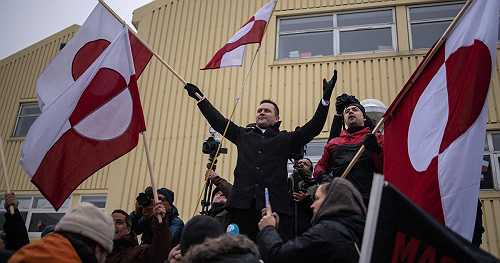 In a shocking move, President Trump has escalated his campaign to take control of Greenland, linking it to a perceived snub by the Nobel Peace Prize committee. The move has left America's European allies reeling, accusing Trump of blackmail and questioning his claims about the strategic importance of the Arctic island.
Trump's Message to Norway's Prime Minister
In a message sent to Norway's Prime Minister Jonas Gahr Støre and shared with other NATO allies, Trump claimed that due to the decision to award someone else the Nobel Peace Prize this year, he no longer feels 'an obligation to think purely of Peace.' He went on to say that he can now think about what is good and proper for the United States of America. In the next sentence, Trump renewed his claim that only full U.S. control can prevent Greenland from falling into the hands of China or Russia.
Allies Reject Trump's Argument
America's closest allies in NATO have rejected Trump's argument that the U.S. needs to own Greenland for security reasons. They note that Greenland already falls under the transatlantic alliance's protection as a Danish territory, and Denmark has given an open invitation for Washington to boost its defense presence in partnership with its allies.
Trump's Claims About Greenland and U.S. Security
Despite efforts by Denmark and other European NATO members to show an understanding of and willingness to address rising competition over control of vital new shipping lanes around the resource-rich island, Trump claims again in his message that 'the World is not secure unless we have Complete and Total Control of Greenland.' He argues that Denmark is incapable of securing the Arctic territory in the face of Russian and Chinese threats.
Denmark's Right to Claim Over Greenland
Trump questions Denmark's right to any claim over Greenland, arguing that the basis for their claim is only that 'a boat landed there hundreds of years ago.' However, this ignores the fact that Denmark became the colonial power in Greenland in the early 18th century, about 50 years before the United States became a sovereign nation with its own navy.
The standoff between Trump and his European allies over control of Greenland has left many questioning the President's motives and judgment. As tensions continue to rise, it remains to be seen how this crisis will play out and what the long-term consequences will be for U.S.-European relations.
Topic Live