




SpaceX receives FCC approval to launch additional 7,500 Starlink satellites.
 Breaking News: SpaceX Gets Green Light for Next-Gen Starlink Satellites
In a major breakthrough for space technology, SpaceX has just received the go-ahead from the Federal Communications Commission (FCC) to launch an additional 7,500 second-generation Starlink satellites. This approval marks a significant milestone in the company's ambitious plans to expand its high-speed internet coverage across the globe.
The FCC's decision is not only a testament to SpaceX's innovative spirit but also a reflection of the growing demand for reliable and fast internet connectivity. With this new batch of satellites, SpaceX aims to provide seamless communication services to underserved communities worldwide, bridging the digital divide and empowering people to access information, education, and economic opportunities.
But what does this mean for the future of space exploration? For one, it paves the way for a more extensive network of Starlink satellites, which will enable faster data transfer rates, lower latency, and greater connectivity. This is particularly crucial in remote areas where traditional internet infrastructure is scarce or non-existent. With Starlink's advanced technology, people can enjoy high-speed internet on their devices, just like they would in urban centers.
The FCC's approval also comes with some conditions. SpaceX must launch 50% of the approved satellites by December 1, 2028, and the remaining 50% by December 2031. This timeline is ambitious, but given SpaceX's track record of innovation and efficiency, it's likely they'll meet these targets.
One of the most exciting aspects of this development is the potential for direct-to-cell connectivity outside the United States. This means that people in remote areas can enjoy seamless communication services without relying on traditional cell towers or internet infrastructure. The implications are vast – from emergency response services to healthcare and education, the possibilities are endless.
But what about the environmental concerns surrounding satellite launches? While it's true that space debris is a growing concern, SpaceX has implemented various measures to mitigate this issue. Their second-generation Starlink satellites are designed with sustainability in mind, featuring advanced propulsion systems and de-orbiting capabilities to minimize their impact on the environment.
The FCC's decision is also significant because it acknowledges the importance of private sector innovation in driving space exploration forward. By partnering with companies like SpaceX, governments can accelerate progress in areas like satellite technology, space tourism, and even lunar missions.
As we look to the future, one thing is clear: space technology is no longer just about scientific discovery – it's about transforming lives on a global scale. With this latest approval, SpaceX is poised to play a leading role in shaping the next chapter of human history. As we continue to push the boundaries of what's possible in space, we're reminded that innovation knows no bounds – not even those of our planet.
In conclusion, the FCC's green light for 7,500 additional Starlink satellites marks a major milestone in SpaceX's mission to democratize access to high-speed internet. With this new technology, we can expect faster data transfer rates, greater connectivity, and a more sustainable approach to space exploration. As we look up at the stars, we're reminded that the possibilities are endless – and it's up to us to seize them.
Sources:
* Federal Communications Commission (FCC)
* SpaceX
* TechCrunch
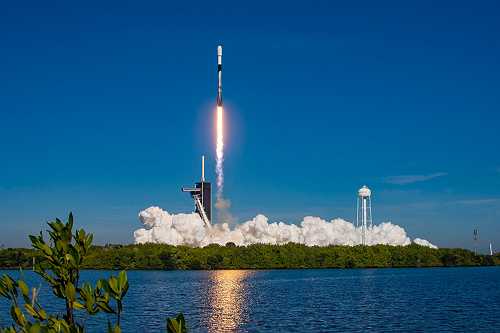
Image Credits: SpaceX (opens in a new window) / Flickr (opens in a new window) under a CC BY-NC 2.0 (opens in a new window) license.
#Space #Startups #SpaceX #Starlink
Topic Live