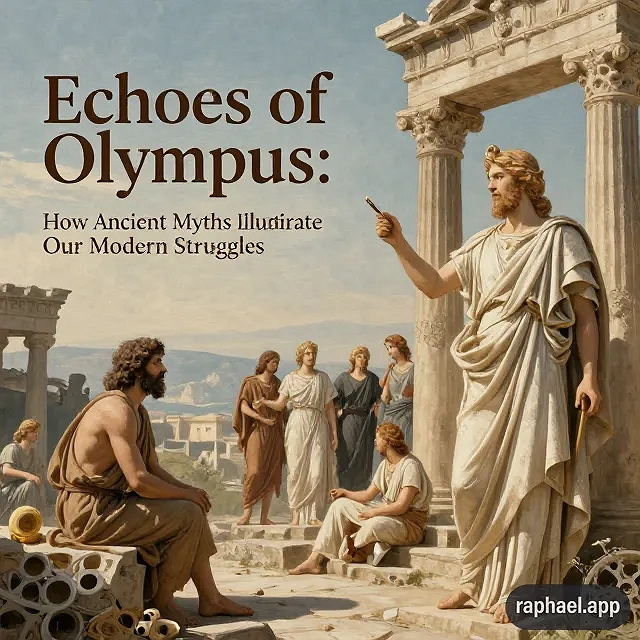



Echoes of Olympus: How Ancient Myths Illuminate Our Modern Struggles.
Echoes of Olympus: How Ancient Myths Illuminate Our Modern Struggles
Picture this: You're scrolling through your feed late at night, likes piling up on a post that hides your exhaustion. Burnout creeps in, a quiet thief stealing your drive, much like the heroes of old who faced trials that tested their very souls. These moments feel new, but they echo ancient myths that reveal our core fights haven't shifted—only the stage has.
Ancient myths give us strong tools to grasp today's psychological hurdles, social rifts, and moral choices. They strip away the noise of modern life to show patterns that help us cope and grow. Through stories from Olympus and beyond, we find timeless wisdom that lights up our modern struggles, from career doubts to societal chaos.
The Hero’s Journey and the Contemporary Quest for Self
Mapping the Monomyth onto Career Traps
Joseph Campbell's Monomyth lays out a clear path: the call to adventure pulls you in, then refusal hits hard, leading to the ordeal in the abyss. In today's jobs, that thrill of a new role sparks excitement, but soon mid-career blues settle like a fog—the endless meetings, the fear of falling behind. Think of tech workers who pivoted during the 2020s AI boom; many refused change at first, faced layoffs as their ordeal, then reinvented themselves as consultants or creators.
This structure mirrors how we chase success yet stumble into stagnation. Data from a 2025 Gallup poll shows 60% of workers feel disengaged, trapped in roles that once promised glory. By seeing your career as a hero's arc, you spot the refusal phase early and push toward reinvention, turning traps into triumphs.
Confronting the Shadow Self: Narcissus and Modern Narcissism
Narcissus stared at his reflection until it consumed him, blind to the world around. Today, social media feeds that obsession with likes, filters, and perfect profiles—our own digital pools that trap us in self-focus. Psychologists like those at the American Psychological Association link this to rising narcissistic traits, where validation comes from screens, not real bonds.
We curate lives online, chasing vanity metrics that leave us empty. A 2024 study found 70% of young adults tie self-worth to follower counts, echoing Narcissus's fall. To break free, pause and question: Does this post build me up or just show a mask? Facing the shadow means embracing flaws, not hiding them.
The Icarus Paradox: Ambition, Overreach, and Burnout Culture
Icarus flew too high, wings melting from the sun's heat, a stark warning on unchecked drive. Now, hustle culture pushes us to grind nonstop—emails at dawn, side gigs till midnight—until we crash from the strain. It's not just hubris; it's the pressure to soar without limits in a world that rewards output over rest.
Burnout rates hit 77% in 2025 per a Deloitte survey, with many leaders admitting they ignored their "wax melting points." Spot yours: maybe it's skipped meals or constant fatigue. Set boundaries early—schedule unplug times or cap work hours—to fly steady, not fall.
Navigating Chaos: Gods, Governance, and Societal Division
Pandora's Box: The Unintended Consequences of Innovation
Pandora opened the jar, unleashing woes that spread far and wide, hope alone left behind. Modern tech mirrors this: AI tools promise ease but flood us with deepfakes and job loss, choices made without full sight of the fallout. Climate tech, for instance, speeds green energy yet strains resources in ways we didn't foresee at launch.
Stats from a 2025 Pew Research report show 55% of people worry about tech's hidden harms, like privacy erosion from smart devices. These innovations solve one problem but birth others, much like Pandora's gift. Balance comes from pausing to weigh risks—ask what "evils" might escape before you act.
The Furies and Modern Accountability: When Justice Feels Elusive
The Furies chased wrongdoers with unyielding fury, guardians of order when laws lagged. In our time, they represent calls for quick justice in slow systems—think movements like #MeToo or climate protests that demand companies own up now. When courts drag, public outcry steps in, much like those ancient avengers.
Recent examples include 2024 boycotts against firms ignoring ethical lapses, forcing policy shifts overnight. A 2025 Amnesty International study notes 40% more accountability wins through grassroots pressure. Embrace this energy: Speak out when systems fail, but channel it wisely to build lasting change.
Sisyphus and the Grind: Finding Meaning in Repetitive Labor
Sisyphus rolled his boulder uphill, only for it to tumble back, a loop of endless toil. Albert Camus saw revolt in his persistence, a way to claim purpose amid the absurd. Today, assembly lines or data entry echo this—automation threatens jobs, leaving workers alienated from their tasks.
A 2025 ILO report highlights 30% of global jobs at risk from robots, fueling that empty grind. Yet Camus urges us to own the push: Find joy in the roll itself. Reframe your daily chores—turn filing into a rhythm that clears your mind, or link emails to bigger goals. Personal meaning trumps external praise every time.
- List your top three routine tasks.
- For each, note one small way it aids your life or others.
- Repeat daily to shift from drudgery to drive.
Internal Conflicts: Archetypes of Anxiety and Self-Doubt
Medusa’s Gaze: Dealing with Fear of Scrutiny
Medusa turned foes to stone with her stare, but she embodied the terror of judgment that freezes us. In modern terms, this is imposter syndrome or the dread of public eyes—speeches that shake you, feedback that stings like a curse. Her story flips the script: Perseus used a shield's reflection to face her safely, suggesting we view critiques through a kind lens.
Public scrutiny amps up in our connected world, with 65% of professionals reporting imposter feelings in a 2025 LinkedIn survey. Self-compassion acts as that shield—treat slip-ups as growth steps, not doom. Practice by journaling wins weekly; it softens the gaze and builds inner strength.
The Labyrinth and Decision Paralysis
The Labyrinth trapped Theseus with its twists, hiding the Minotaur at its heart—a maze of choices with no clear exit. We face the same in info overload: endless options for careers, apps, or even meals lead to stall-out. Ariadne's thread guided him out, a simple line through chaos that stands for a core rule to follow.
Decision fatigue hits hard; Harvard research from 2024 shows it cuts productivity by 20% after just a few picks. Lean on basics: Set one guiding value, like family time, to thread your path. Start small—choose meals from a short list—to ease the maze and move forward.
- Pick a big decision you're stuck on.
- Name your top value (e.g., health, joy).
- Map choices against it; discard what doesn't fit.
Conclusion: Weaving the Ancient Threads into a Modern Tapestry
Ancient myths cut through our cluttered lives, offering steady stories for shaky times. From hero quests in careers to Furies in justice fights, they map our modern struggles with clear insight. These tales remind us: Our battles persist, but so does our power to rise.
Here are key steps to apply this wisdom:
- Spot your hero's call—don't refuse the pivot when work stalls.
- Guard against Icarus highs; define burnout signals now.
- Thread your labyrinth with one firm guide for tough choices.
- Reframe Sisyphus grinds by owning your purpose daily.
Stories from the past build our strength today. Dive into a myth that hits close—let it spark the resilience you need. What ancient echo calls to you?