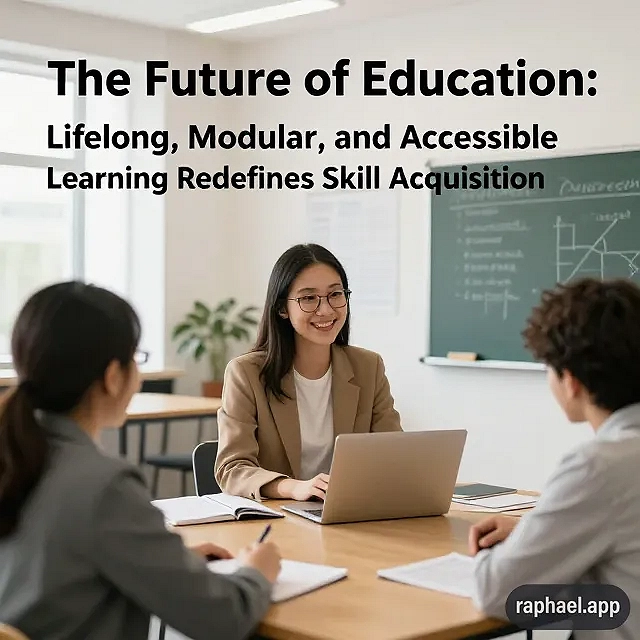



The Future of Education: Lifelong, Modular, and Accessible Learning Redefines Skill Acquisition.
The Future of Education: Lifelong, Modular, and Accessible Learning Redefines Skill Acquisition
Imagine a world where your job skills expire faster than milk in the fridge. Automation and AI tools are reshaping jobs every few years. Old school setups, like finishing school and coasting through a career, just don't cut it anymore. You need to keep learning to stay ahead. This shift calls for a new way: lifelong learning, modular paths, and easy access for all. These ideas fix the gaps in how we build skills today. They make education fit real life, not the other way around.
The Imperative for Lifelong Learning in the Digital Age
Education can't stop after high school or college. Jobs change too quick for that. Continuous professional development keeps you sharp. Upskilling and reskilling become daily habits, not one-time events.
The Shifting Employment Landscape and Skill Half-Life
Skills fade fast now. A report from the World Economic Forum in 2025 says half of today's core work skills will be outdated by 2030. Tech jobs, for instance, see skills last just 2.5 years on average. Think about coders: what you learn today might need tweaks tomorrow. This short shelf life pushes workers to refresh knowledge often. Without it, you risk falling behind in a job market that values fresh abilities.
Cultivating a Growth Mindset: The Psychological Shift
A growth mindset helps you see learning as a lifelong adventure. It's about believing you can improve with effort. To build this, try short daily sessions. Set aside 15 minutes each morning for a podcast or quick video on your field. Track progress in a journal to stay motivated. Over time, these small steps weave learning into your routine. You feel more confident facing changes at work.
Corporate Investment in Perpetual Education
Big companies pour money into ongoing training. Amazon's Career Choice program pays for courses in high-demand areas like data science. Google offers free certifications through Grow with Google. Microsoft partners with platforms for employee upskilling. These efforts boost retention and spark innovation. Workers gain skills that match company needs. In 2025, firms spent over $370 billion on such programs worldwide. It's a win for everyone involved.
Modular Education: Breaking Down Degrees into Stackable Credentials
Modular learning chops big degrees into bite-sized pieces. You earn microcredentials that stack up like building blocks. This approach fits busy lives better than long hauls. Stackable credentials let you prove skills step by step. Competency-based education focuses on what you know, not hours spent.
The Rise of Microcredentials and Digital Badges
Platforms make this easy. Coursera's specializations cover topics like digital marketing in weeks. Google's IT Support Professional Certificate takes six months part-time. Microsoft's Azure badges show cloud skills to bosses. These digital proofs go on resumes or LinkedIn. Employers trust them because they tie to real tasks. In a 2026 survey by LinkedIn, 70% of hiring managers favored microcredentials over traditional degrees for some roles.
Competency-Based Education (CBE) vs. Seat Time
Old systems count clock time in class. CBE checks if you master the material. You move ahead when ready, no waiting. This speeds things up for quick learners. Say you're good at math; skip basics and dive into advanced stats. Programs like Western Governors University use this model. Graduates finish faster and save money. It's fairer, too—rewards talent over endurance.
Creating Personalized Learning Pathways
Modularity lets you pick what fits your goals. Need project management for your next promotion? Grab a short course, not a full MBA. Skip gen ed fluff like history if it's not your path. Tools from edX or Udacity help map these routes. You build a custom credential that matches your job exactly. This tailored setup keeps motivation high. No more wading through irrelevant stuff.
Accessibility and Democratization: Learning Beyond the Ivory Tower
Barriers like distance or cost lock many out of good education. The future tears them down. Remote learning infrastructure opens doors wide. Educational equity means everyone gets a fair shot. Global classrooms connect learners everywhere.
Leveraging Technology for Global Reach (MOOCs and Hybrid Models)
MOOCs bring top school content to your screen. Platforms like edX offer Harvard courses for free. Khan Academy mixes videos with live chats. In 2025, over 200 million people joined MOOCs worldwide. Hybrid setups blend online and in-person for flexibility. A farmer in rural India can study agronomy from MIT experts. This reach changes lives in far-off spots.
Addressing the Digital Divide and Equity Concerns
Not everyone has steady internet or devices. That's a big hurdle. Public-private teams work on fixes. Starlink satellites now cover remote areas with affordable broadband. Governments in Africa and Asia subsidize tablets for kids. Still, 2.6 billion lack reliable access in 2026. Solutions like offline apps help bridge gaps. Equity pushes for inclusive designs from the start.
Alternative Assessment Methods for Diverse Learners
Standard tests don't suit all. Future options include video submissions or portfolios. Voice recognition aids those with writing issues. Adaptive quizzes adjust to your pace. This nods to different styles—visual, hands-on, you name it. Tools like Duolingo use games for language checks. Physical limits? VR simulations test skills without strain. It's about showing what you can do, any way that works.
The Role of AI and Adaptive Learning Systems
AI powers the shift to custom education. It spots your weak spots and adjusts. Personalized learning paths feel like a personal coach. Learning analytics track progress in real time. AI tutoring makes help available anytime.
AI Tutors and Instant Feedback Loops
AI acts as your sidekick. Duolingo's bot corrects grammar on the spot. Grammarly flags errors as you write essays. These tools give tips right away, keeping you hooked. No more waiting for teacher grades. In a busy day, this quick nudge builds skills fast. Students using AI tutors score 20% higher on tests, per a 2025 study.
Predictive Analytics for Intervention and Guidance
AI watches patterns to spot trouble early. It flags if you're skipping modules or scores drop. Then, it suggests breaks or extra resources. Platforms like DreamBox use this for math kids. For adults, LinkedIn Learning predicts career gaps. Human mentors step in when needed. This early help cuts dropout rates by half.
Content Curation and Dynamic Curriculum Updates
AI scans books, articles, and news for fresh info. It updates courses to match today's world. Outdated sections get flagged and swapped. IBM's Watson curates tech training this way. For lifelong learners, this means always-current material. No more dusty textbooks. It keeps your knowledge sharp as trends shift.
Conclusion: The Future Learner—Agile, Adaptable, and Autonomous
Lifelong learning, modular setups, and wide access team up for a better system. You own your growth, picking paths that suit you. Tech like AI makes it smooth and smart. This model turns education into a tool for life, not a checkpoint.
- Formal degrees matter less than proven, up-to-date skills you show.
- Learning blends into work, not as a separate chore.
- Tech drives custom fits and growth for millions.
Step into this as a learner, teacher, or boss. Grab a microcredential today. Shape your future one module at a time.