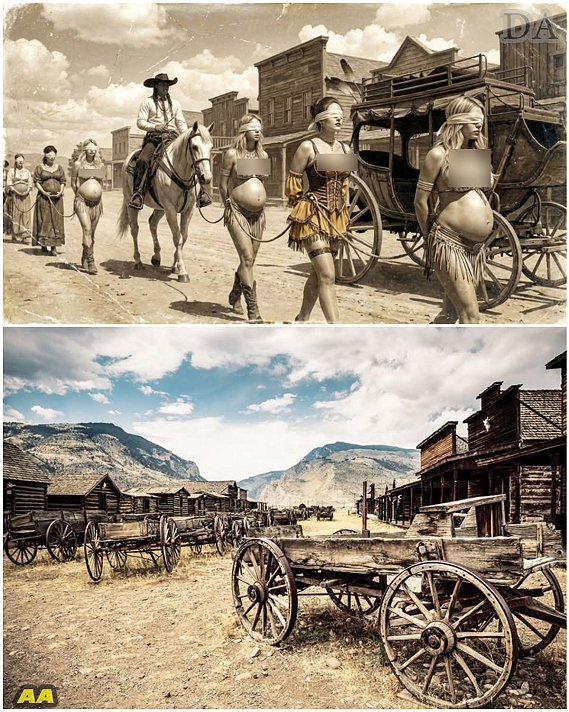




They were not called prisoners, yet they were never free.
Behind stone walls and wooden gates, women lived lives measured not by years but by duties. From the moment they were old enough to understand obedience, their bodies no longer belonged to them. Fathers decided their futures, husbands claimed their labor, and society watched closely to ensure they never forgot their place.
Marriage was not a choice—it was a transfer of ownership.
A woman was expected to serve in silence. Her value was counted in how well she endured pain, how many children she produced, and how little she complained. Desire was never hers to define. Pleasure was never hers to expect. She existed to soothe men’s needs, to warm their beds, to carry their bloodlines forward like a living vessel.
Many lived behind locked doors, forbidden to step outside without permission. Windows were small. Voices were lowered. Dreams were dangerous things, quickly beaten down by routine and fear. Some women stopped speaking altogether, learning that silence was safer than truth.
Childbirth came again and again, not as a miracle, but as an obligation. Their bodies weakened, their hands hardened, their youth disappeared before they understood what had been taken from them. If a child died, the blame fell on the mother. If she could not conceive, she was broken. If she spoke of exhaustion, she was ungrateful.
History rarely wrote their names.
They were recorded as wives, concubines, servants—never as individuals. Their suffering was normalized, wrapped in tradition, justified by religion and law. Pain was expected. Resistance was punished.
And yet, they endured.
In the quiet moments before dawn, when the world slept, some women remembered who they were before captivity. They whispered stories to their daughters, teaching them strength disguised as obedience. They learned to survive in small ways—by remembering, by teaching, by refusing to let their humanity fully die.
Not all chains were iron.
Some were rules. Some were expectations. Some were the unspoken agreement that women existed to be used and forgotten.
But endurance itself became a form of defiance.
Because every breath they took, every child they protected, every memory they preserved, was proof that they were more than tools, more than bodies, more than machines made to suffer.
They were witnesses.
And history, whether it wanted to or not, was written through them. #Africa #Africa
Behind stone walls and wooden gates, women lived lives measured not by years but by duties. From the moment they were old enough to understand obedience, their bodies no longer belonged to them. Fathers decided their futures, husbands claimed their labor, and society watched closely to ensure they never forgot their place.
Marriage was not a choice—it was a transfer of ownership.
A woman was expected to serve in silence. Her value was counted in how well she endured pain, how many children she produced, and how little she complained. Desire was never hers to define. Pleasure was never hers to expect. She existed to soothe men’s needs, to warm their beds, to carry their bloodlines forward like a living vessel.
Many lived behind locked doors, forbidden to step outside without permission. Windows were small. Voices were lowered. Dreams were dangerous things, quickly beaten down by routine and fear. Some women stopped speaking altogether, learning that silence was safer than truth.
Childbirth came again and again, not as a miracle, but as an obligation. Their bodies weakened, their hands hardened, their youth disappeared before they understood what had been taken from them. If a child died, the blame fell on the mother. If she could not conceive, she was broken. If she spoke of exhaustion, she was ungrateful.
History rarely wrote their names.
They were recorded as wives, concubines, servants—never as individuals. Their suffering was normalized, wrapped in tradition, justified by religion and law. Pain was expected. Resistance was punished.
And yet, they endured.
In the quiet moments before dawn, when the world slept, some women remembered who they were before captivity. They whispered stories to their daughters, teaching them strength disguised as obedience. They learned to survive in small ways—by remembering, by teaching, by refusing to let their humanity fully die.
Not all chains were iron.
Some were rules. Some were expectations. Some were the unspoken agreement that women existed to be used and forgotten.
But endurance itself became a form of defiance.
Because every breath they took, every child they protected, every memory they preserved, was proof that they were more than tools, more than bodies, more than machines made to suffer.
They were witnesses.
And history, whether it wanted to or not, was written through them. #Africa #Africa