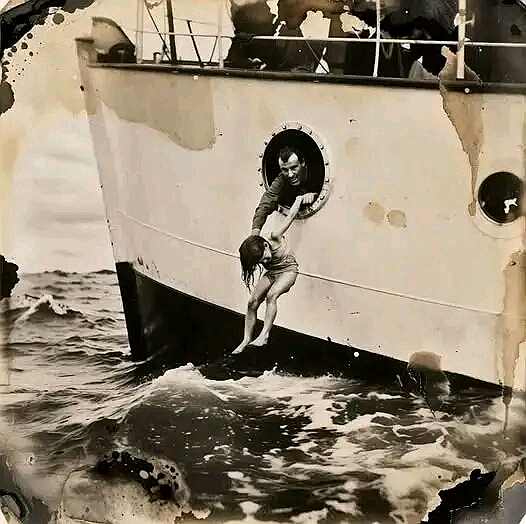




In October 1917, an immigrant passenger ship bound from Italy to New York was caught in a violent Atlantic storm.
Among the third-class passengers was a twenty-eight-year-old carpenter named Antonio Russo, traveling alone with his five-year-old daughter, Maria. Antonio’s wife had died in childbirth two years earlier. America was supposed to be their second beginning. A place where poverty loosened its grip. A place where Maria might grow up with choices her mother never had.
At 2:00 a.m., the storm struck hard.
Waves smashed across the deck. Water poured into the lower compartments where immigrant families slept. The ship began to list. Panic spread faster than the flooding.
Antonio lifted Maria from their bunk and ran. By the time he reached the corridor, water was already waist-deep and rising fast. Passengers screamed, shoved, fell. Bodies pressed together, all of them fighting toward the same narrow stairways, the same shrinking chance at life.
Antonio held Maria above the water with both arms, pushing forward inch by inch. She cried for her mother. He told her to hold on. He told her they were going to be all right.
But he knew they were not.
The ship tilted sharply. The crush of people grew unbearable. The lifeboats were unreachable. Antonio understood what was coming with a clarity that left no room for hope. He had minutes. Maybe less.
He spotted a broken porthole on the deck, shattered by the storm. It opened directly to the ocean. The hole was barely large enough for a child.
Antonio looked at his daughter.
She clung to him, terrified, not understanding why her father’s face had changed.
This was the last choice he would ever make.
He forced his way to the porthole, lifted Maria, and pushed her through the opening.
She screamed as she fell into the black Atlantic.
Antonio leaned out, shouting with everything he had left.
“Swim, Maria. Swim to the light. Ships are coming. Swim.”
In the distance, searchlights swept across the water. Rescue boats were nearby. Maria had a chance if she could stay afloat long enough.
Antonio did not.
He was too large to follow her. There was no way out for him. He stayed behind as the ship continued to sink.
Seven minutes later, the vessel disappeared beneath the waves.
Antonio Russo drowned in the third-class compartments, along with 117 other passengers who never reached the lifeboats. His body was never recovered.
Maria Russo was pulled from the ocean forty-five minutes later.
She was alive.
Barely breathing. Blue with cold. Wrapped in blankets by rescuers and carried to a hospital ship, she was five years old, alone, orphaned, and unable to speak English. The only thing she remembered clearly was her father’s voice.
“Swim to the light.”
She had swum. She had survived.
He had not.
Maria was placed in a New York orphanage. No one could tell her what had happened to Antonio Russo. No records were clear. No bodies were found. For years, she believed he might still be alive. That he would come for her.
When he never did, she reached a different conclusion.
She believed he had abandoned her.
Maria lived with that belief for twenty-five years.
She grew up carrying the memory of being thrown into the ocean by the one person she trusted most, convinced that moment meant she was unwanted. That her father had chosen escape over her.
In 1995, when Maria was eighty-three years old, a journalist researching the 1917 shipwreck found passenger records that finally told the truth.
Antonio Russo had died in the sinking.
He had not abandoned his daughter.
He had saved her.
Maria wept as she told her story during the interview.
“I thought he was killing me,” she said. “I didn’t understand he was giving me my only chance. I was screaming. I wanted my father. I didn’t want the water. But I swam because he told me to.”
She paused, her voice breaking.
“For twenty-five years, I believed my father threw me away. Then I learned he threw me toward life and stayed behind to die.”
Maria lived until 2004, dying at ninety-two years old.
She married. She had four children. She had nine grandchildren and six great-grandchildren. Thirty-one lives existed because one man chose his daughter over himself.
“I have lived seventy-eight extra years because of my father,” she said. “Every birthday, every joy, every ordinary day came from that moment.”
She closed the interview with these words:
“I see his face in the porthole every night when I close my eyes. I hear him telling me to swim. I’ve been swimming to the light my whole life. I hope he knows I lived well. I hope when I die, I see him again and can finally tell him thank you.”
Then she smiled through tears.
“Ti amo, Papa.”
Among the third-class passengers was a twenty-eight-year-old carpenter named Antonio Russo, traveling alone with his five-year-old daughter, Maria. Antonio’s wife had died in childbirth two years earlier. America was supposed to be their second beginning. A place where poverty loosened its grip. A place where Maria might grow up with choices her mother never had.
At 2:00 a.m., the storm struck hard.
Waves smashed across the deck. Water poured into the lower compartments where immigrant families slept. The ship began to list. Panic spread faster than the flooding.
Antonio lifted Maria from their bunk and ran. By the time he reached the corridor, water was already waist-deep and rising fast. Passengers screamed, shoved, fell. Bodies pressed together, all of them fighting toward the same narrow stairways, the same shrinking chance at life.
Antonio held Maria above the water with both arms, pushing forward inch by inch. She cried for her mother. He told her to hold on. He told her they were going to be all right.
But he knew they were not.
The ship tilted sharply. The crush of people grew unbearable. The lifeboats were unreachable. Antonio understood what was coming with a clarity that left no room for hope. He had minutes. Maybe less.
He spotted a broken porthole on the deck, shattered by the storm. It opened directly to the ocean. The hole was barely large enough for a child.
Antonio looked at his daughter.
She clung to him, terrified, not understanding why her father’s face had changed.
This was the last choice he would ever make.
He forced his way to the porthole, lifted Maria, and pushed her through the opening.
She screamed as she fell into the black Atlantic.
Antonio leaned out, shouting with everything he had left.
“Swim, Maria. Swim to the light. Ships are coming. Swim.”
In the distance, searchlights swept across the water. Rescue boats were nearby. Maria had a chance if she could stay afloat long enough.
Antonio did not.
He was too large to follow her. There was no way out for him. He stayed behind as the ship continued to sink.
Seven minutes later, the vessel disappeared beneath the waves.
Antonio Russo drowned in the third-class compartments, along with 117 other passengers who never reached the lifeboats. His body was never recovered.
Maria Russo was pulled from the ocean forty-five minutes later.
She was alive.
Barely breathing. Blue with cold. Wrapped in blankets by rescuers and carried to a hospital ship, she was five years old, alone, orphaned, and unable to speak English. The only thing she remembered clearly was her father’s voice.
“Swim to the light.”
She had swum. She had survived.
He had not.
Maria was placed in a New York orphanage. No one could tell her what had happened to Antonio Russo. No records were clear. No bodies were found. For years, she believed he might still be alive. That he would come for her.
When he never did, she reached a different conclusion.
She believed he had abandoned her.
Maria lived with that belief for twenty-five years.
She grew up carrying the memory of being thrown into the ocean by the one person she trusted most, convinced that moment meant she was unwanted. That her father had chosen escape over her.
In 1995, when Maria was eighty-three years old, a journalist researching the 1917 shipwreck found passenger records that finally told the truth.
Antonio Russo had died in the sinking.
He had not abandoned his daughter.
He had saved her.
Maria wept as she told her story during the interview.
“I thought he was killing me,” she said. “I didn’t understand he was giving me my only chance. I was screaming. I wanted my father. I didn’t want the water. But I swam because he told me to.”
She paused, her voice breaking.
“For twenty-five years, I believed my father threw me away. Then I learned he threw me toward life and stayed behind to die.”
Maria lived until 2004, dying at ninety-two years old.
She married. She had four children. She had nine grandchildren and six great-grandchildren. Thirty-one lives existed because one man chose his daughter over himself.
“I have lived seventy-eight extra years because of my father,” she said. “Every birthday, every joy, every ordinary day came from that moment.”
She closed the interview with these words:
“I see his face in the porthole every night when I close my eyes. I hear him telling me to swim. I’ve been swimming to the light my whole life. I hope he knows I lived well. I hope when I die, I see him again and can finally tell him thank you.”
Then she smiled through tears.
“Ti amo, Papa.”